01 October 2026

Not all skin cancers are treated in the same way. Some can be removed in a single appointment with a standard surgical excision. Others need a more careful, staged approach, where the cancer is removed in layers and checked under a microscope during the procedure.
This difference can be confusing. If one person has a skin cancer removed quickly, why does another need Mohs surgery or staged treatment? The answer usually comes down to three things:
Skin cancers behave differently. Some grow slowly and stay well contained. Others spread in subtle ways beneath the surface or develop in areas where precision matters more. That is why treatment is tailored to the individual lesion rather than using a one size fits all approach.
When skin cancers are found early and have clear, well-defined edges, they can often be removed with a standard surgical excision. This involves removing the visible cancer along with a margin of healthy-looking skin. The tissue is then examined by a pathologist to confirm whether the cancer has been fully removed.
This approach is commonly used for lower risk skin cancers in areas with enough surrounding skin to close the wound well.
Some skin cancers are more complex. Their edges may be hard to see, they may grow in fine strands under the skin, or they may be located in areas where preserving healthy tissue is especially important.
This is often the case on the face, nose, eyelids, ears, lips, scalp and hands. In these areas, removing too little tissue risks leaving cancer cells behind, while removing too much can affect appearance or function.
In these situations, a staged approach may be recommended.
Mohs surgery is a specialised technique used to remove some types of skin cancer. The cancer is removed in very thin layers, with each layer examined under a microscope straight away. If cancer cells are still present, only the affected area is treated further. This continues until no cancer cells are seen at the edges of the tissue being examined.
Mohs surgery is often used for skin cancers on the face or other sensitive areas, for cancers with unclear edges, or for cancers that have returned after previous treatment. The aim is complete removal while preserving as much healthy skin as possible.
The pathology of a biopsy or excision does more than confirm the diagnosis. It provides detailed information about how the skin cancer is behaving. It shows how the skin cancer is growing, how deep it goes, and whether the edges are clear.
Some basal cell carcinomas are slow growing and well defined, while others spread in less obvious ways. Squamous cell carcinomas also vary, with some easily removed and others needing wider margins or staged treatment. Melanoma is managed differently again, with treatment guided by its depth and stage.
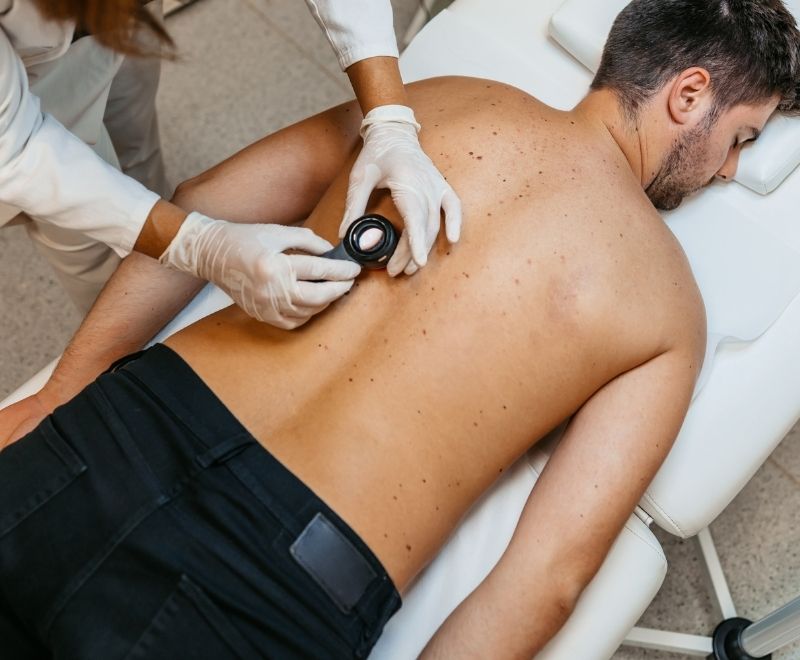
Early detection can make treatment planning more straightforward. SkinTracker™, Skin Institute’s advanced full body imaging system, helps clinicians monitor subtle skin changes over time, supporting earlier detection and diagnosis of new or changing lesions.
A small skin cancer on the cheek may need a different treatment plan from a similar looking lesion on the shoulder. That does not mean one is more dangerous. It often means the surgeon needs to be more precise.
In visible or tight areas, a staged approach can help balance complete removal with the best possible repair.
Skin cancers are treated differently because they behave differently. The type of cancer, where it is on the body, and what the pathology shows all help guide the safest treatment plan.
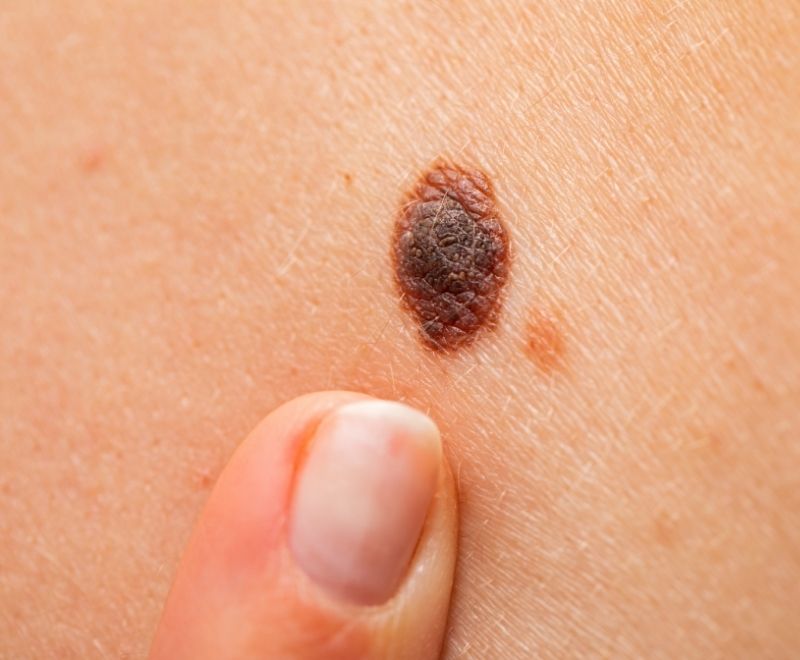
If you notice a spot that is changing, bleeding, not healing or simply does not seem right, a professional skin check can provide clarity and peace of mind. Early detection often means simpler treatment and better outcomes.