What is SkinTracker™
SkinTracker™ is our most advanced tool for monitoring your skin.
It builds a clear, trackable record that allows us to detect changes and flag areas of concern early, including those not visible to the naked eye.
Regular SkinTracker™ monitoring helps support early detection when issues are easier to treat and far less likely to become serious, helping you stay ahead of anything that needs attention.
It is the combination of expert clinical care and advanced technology that makes SkinTracker™ one of our most accurate tools for early melanoma detection.
How Total Body Imaging & Mole Mapping Works
SkinTracker™ Total Body Imaging sets a new standard in early detection.
Using advanced imaging technology and AI-assisted analysis, it creates a precise, detailed record of your skin. Over time, these images help our clinicians spot even the smallest changes in your skin that may require attention.
Step-by-Step Process:
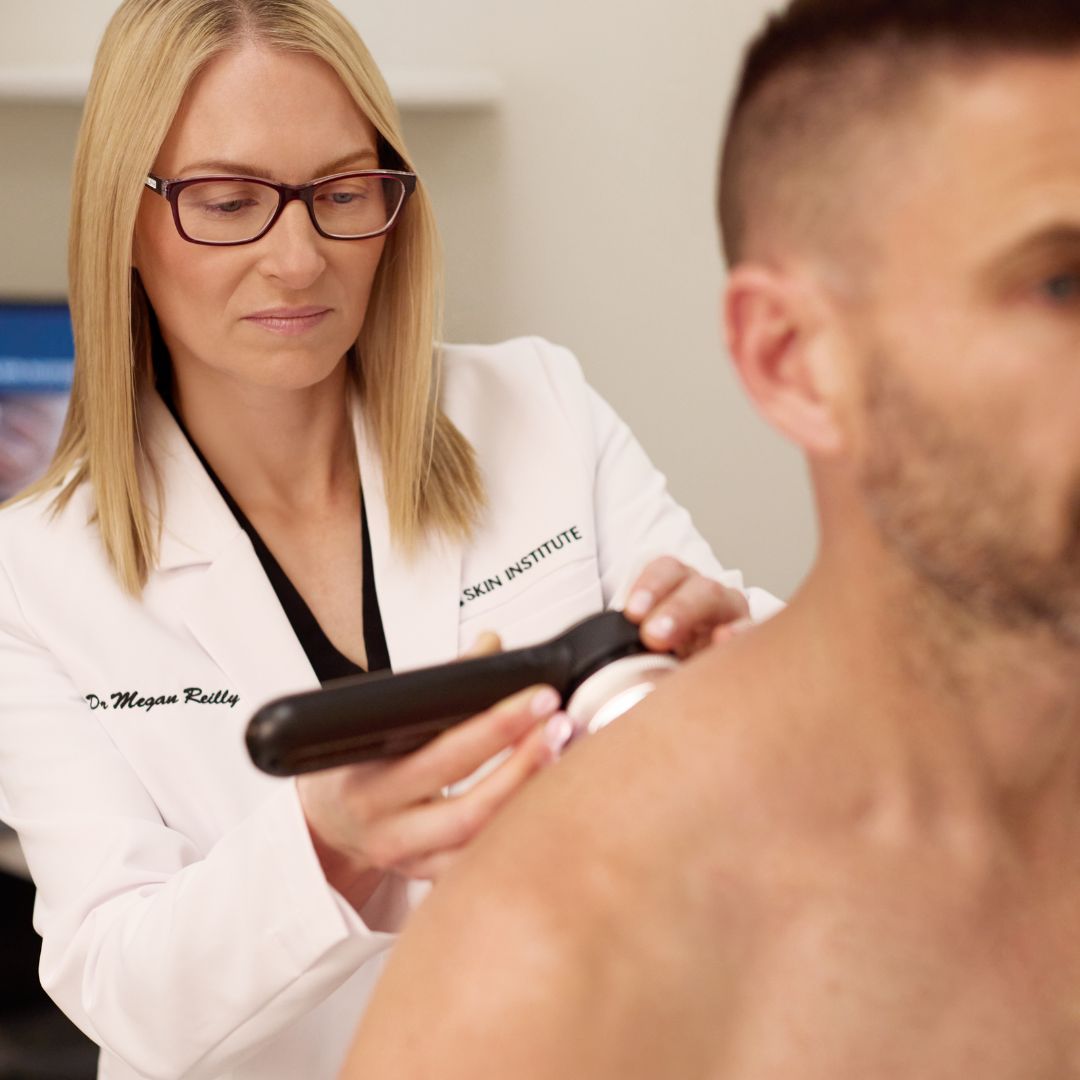
- Expert Clinician Review – Our clinicians complete a full-body skin check.
- Annual Imaging – Every year, we capture detailed images of your entire body.
- AI-Assisted Analysis – When you have two sets of images to compare, our AI identifies any new changes to spots, moles or lesions in your skin.
- Track and Compare – All results are recorded and used as a comparison at your next check.
- Early Intervention – If any concerns arise, our Skin Institute team can provide treatment and follow-up care.
What You Can Expect
Step 1: Baseline Total Body Imaging with SkinTracker™
Your first baseline appointment will take approximately 20-minutes to capture your complete skin record. The baseline images are stored securely, for future comparison.
Step 2: Skin Check
A comprehensive full body Skin Check with one of our experienced Skin Cancer Doctors or Nurse Dermoscopists.
Step 3: Ongoing skin tracking
Return for follow-up imaging (usually 12 months later) so we can compare “before and after” images. This allows us to detect even the smallest new or changing spots early. Your skin cancer clinician will discuss the comparison of your baseline images (from your first appointment) and new images with you.
Bonus: Unlimited free spot checks between SkinTracker™ appointments.
The power is in the combination: expert clinical assessment + AI-powered imaging.
Why Have SkinTracker™?
Because your skin is always changing and some changes can be hard to see.
SkinTracker™ gives you:
- Confidence that even the smallest changes are being tracked.
- Advanced protection with AI imaging that sees what you can’t.
- Peace of mind between checks, knowing your record is securely stored.
- Accuracy at future skin checks with precise “before and after” comparisons.
- Continuity of care, from imaging to diagnosis and treatment, all under one roof.
Where can I have SkinTracker™?
SkinTracker™ is currently available at:
Cost
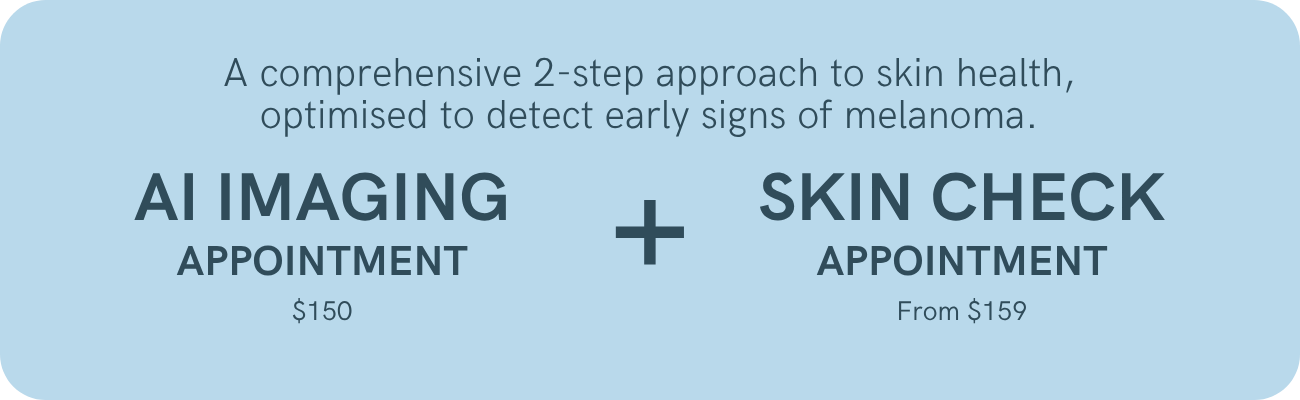
Skin Check
$159 with a Nurse Dermoscopist, or
$249 with a Skin Cancer Doctor
Baseline Total Body Imaging with SkinTracker™
$150 Full Body Imaging
Subsequent imaging
$150 (usually 12 months later)
Book your SkinTracker™ Imaging appointment today
Learn More About Skin Health
Frequently Asked Questions
- Q: What is the difference between a standard skin check and SkinTracker™?
- A: A standard check relies on the clinician’s eye at that moment. SkinTracker™ combines a clinician's exam with AI-driven total body photography (mole mapping) to create a digital record. This allows us to track even the slightest changes over time that the naked eye might miss.
- Q: Does the order of my appointments matter?
- A: No, not for your baseline imaging. Your appointments can take place in either order.
However, for subsequent appointments, your SkinTracker™ total body imaging must be completed before your skin check. This allows your clinician to review the AI-comparison between your current and previous images during your skin check.
- Q: What happens during a SkinTracker™ appointment?
- A: During your SkinTracker™ appointment, our specially trained team will capture a series of high-resolution, total-body images using smart imaging technology. These images form a detailed visual record of your skin, allowing us to monitor any new or changing moles, lesions or spots over time. The process is quick, non-invasive and typically takes around 15 minutes.
- Q: Do I need to get fully undressed for Total Body Imaging?
- A: Yes, to map every mole, full body imaging is required (underwear can often be kept on depending on the protocol). However, we prioritise your privacy and dignity. You will be in a private room, and images are securely encrypted and treated with strict medical confidentiality.
- Q: How long does a SkinTracker™ appointment take?
- A: For your first baseline SkinTracker™ Total Body Imaging appointment, please allow approximately 20 minutes for the AI imaging process. You will also need a separate Skin Check, where one of our skin cancer specialists will carry out a physical skin examination to check for signs of skin cancer.
- Q: Will a Skin Cancer Clinician review my images?
- A: If you have had only your baseline imaging, your clinician may refer to those images during your skin check. Once you have two or more sets, your clinician will review the comparison between them to identify any new or evolving lesions.
The second set of total body images is usually captured a year after the first. Each subsequent set is compared with earlier images, building a clearer picture of your skin and supporting ongoing monitoring and the early detection of changes.
- Q: Do I need a referral to book a Skin Check?
- A: No, you do not need a referral from a GP to have total body imaging with SkinTracker™. You can book directly with our nurse demoscopists, Skin Cancer experts or Dermatologists for an assessment.
- Q: Is SkinTracker™ covered by health insurance in NZ?
- A: Many comprehensive policies (such as Southern Cross Health Insurance) may cover skin checks and mole mapping. We recommend checking with your provider and your specific policy for "Skin Cancer Checks" or "Mole Mapping" coverage prior to booking.
- Q: What happens next if I have a lesion, mole or spot I am concern about?
- A: If you notice a lesion, mole or spot you are concerned about during your imaging appointment, your Imaging Technician will help you book a free spot check with one of our Skin Cancer Clinicians. This can be arranged ahead of your already scheduled skin cancer assessment, ensuring any concerns are addressed as soon as possible.
- Q: How often should I have a SkinTracker™ appointment?
- A: The frequency of your future SkinTracker™ appointments is based on the individual patient’s melanoma risk. As a general guide, individuals with a moderate melanoma risk are typically recommended to have a SkinTracker™ appointment every 12 to 24 months. We recommend patients discuss this with their Skin Cancer Clinician.
- Q: How often should I get my skin checked for melanoma?
- A: For most adults, a skin check with a skin cancer expert is recommended, while individuals with a higher risk—such as a history of skin cancer, fair skin, or numerous moles—should have check-ups every 3 to 6 months. Regular self-examinations are recommended every few weeks to monitor for changes.
The frequency of your future SkinTracker™ appointments is based on the individual patient’s melanoma risk. As a general guide, individuals with a moderate melanoma risk are typically recommended to have a SkinTracker™ appointment every 12 to 24 months. We recommend patients discuss this with their Skin Cancer Clinician.
- Q: What are the risk factors for melanoma in New Zealand?
- A: In New Zealand, 2 in 3 people will develop skin cancer at some point in their lives.
- Q: Is it safe to use AI for skin monitoring?
- A: Yes, it is safe. SkinTracker™ uses AI as a supportive tool to assist our clinicians in monitoring your skin over time. The AI does not make any diagnostic decisions. Instead, it highlights areas of potential change or concern. These are then carefully reviewed by our qualified Skin Cancer Clinicians. This combination of smart technology and expert clinical assessment enhances accuracy and supports the early detection of all types of skin cancer.
- Q: Who will be taking my SkinTracker™ images?
- A: Your SkinTracker™ images will be taken by our friendly and specially trained Imaging Technicians. They will guide you through a series of nine simple body positions to ensure all necessary images are captured.
- Q: Can I access my SkinTracker™ images?
- A: Yes, you can access your images if you wish. Contact our friendly team on reception and they will assist you with the process.
- Q: How do you keep my personal data and images secure?
- A: Your privacy is our priority. All images and personal health information are securely stored within Skin Institute’s encrypted systems, fully compliant with New Zealand privacy laws and medical data regulations. Access is strictly limited to authorised medical professionals directly involved in your care, ensuring your data remains confidential and protected at all times.
- Q: Who isn't suitable for a SkinTracker?
- A: For some people, changes to the body or skin can make these images less reliable. In these situations, we may recommend delaying imaging or exploring other options for monitoring your skin.
Total Body Imaging may not be suitable for:
People under 18 years of age
As the body is still growing and changing, baseline images often need to be repeated frequently, which reduces the long-term value of the scan.
Pregnant women
Hormonal and physical changes during pregnancy can significantly affect the skin and body shape, which may impact the accuracy of your first baseline images.
People currently experiencing significant weight changes
This includes individuals undergoing bariatric surgery, gastric band procedures, or medically assisted weight loss (such as GLP-1 medications). Major body changes can affect how images compare over time and may require scans to be repeated.
People with very dense body hair
Heavy body hair can sometimes obscure skin lesions and make it harder for both clinicians and imaging software to accurately assess the skin.
People with extensive tattoos
Large areas of tattoo coverage can occasionally hide underlying skin lesions and make long-term comparison more difficult.
People unable to stand or hold the required imaging positions
The imaging process involves a series of standardized poses so we can capture consistent, repeatable photographs.
People with widespread skin infections or severe inflammatory skin conditions
In some cases, imaging may be postponed until the skin has settled. If a condition is severe or ongoing, total body imaging may not be the most suitable monitoring option.
People with photosensitive epilepsy
The imaging process involves flash photography. If flashing lights trigger seizures, imaging should only be considered with guidance from your treating clinician.
If you're unsure whether Total Body Imaging is right for you, our team will be happy to discuss your individual situation and recommend the best way to monitor your skin health.