01 October 2026
New Zealand has one of the highest melanoma rates in the world, making regular skin checks a critical part of long-term health. Skin cancer is highly treatable when detected early, and early detection begins with awareness.
Skin Institute has recently introduced SkinTracker™, combining AI enabled total body imaging with clinician expertise to detect changes before you can see them. While monthly self-skin checks are important, they are only part of the picture.
Anyone can develop skin cancer, but certain factors increase your risk.
You may be at higher risk if you have fair skin, a history of sunburn, more than 50 moles, a personal or family history of melanoma, or significant sun exposure over your lifetime. Take our Melanoma Risk Assessment Quiz to understand your personal risk.
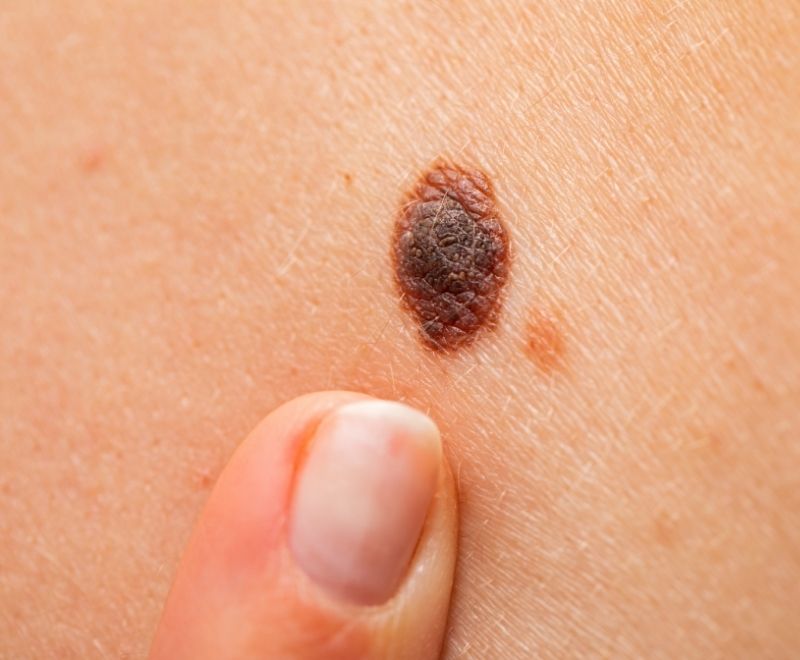
One half of the mole does not match the other.
Edges appear uneven, blurred, or jagged rather than smooth.
Multiple colours within the same spot such as brown, black, red or white.
Moles larger than 6mm or any spot that is growing.
Any change in size, shape, colour, texture, itching, or bleeding.
Also watch for the “ugly duckling” sign. If one mole looks noticeably different from the rest, trust your instincts and have it checked.
Examine all areas of your body including your scalp, back, soles of your feet, and under your nails.
Self-checks are valuable, but they have limitations. The human eye cannot detect microscopic changes and many high-risk areas such as the back or scalp are difficult to examine properly.
Many melanomas also begin as new lesions rather than existing moles. In fact, over 70% of melanomas appear on skin that previously looked normal*. Without a visual baseline, subtle changes can go unnoticed until they are more advanced.
SkinTracker™ combines total body imaging, AI assisted analysis and specialist clinician review. High resolution images are captured and mapped, creating a living skin record that allows changes to be tracked over time.
This technology helps improves early detection, supports clinical accuracy and provides reassurance through consistent monitoring.
Private total body imaging takes approximately 15 to 20 minutes using advanced, non-invasive technology.
The first imaging appointment becomes your baseline for future assessments. While your clinician may briefly refer to your baseline images during your next skin cancer assessment, no changes over time can be assessed until a second set is captured. A detailed review begins once a second set of SkinTracker™ images has been captured and from your second imaging session onwards, each new set of images is compared to previous ones, which builds a clearer picture for monitoring and early detection.
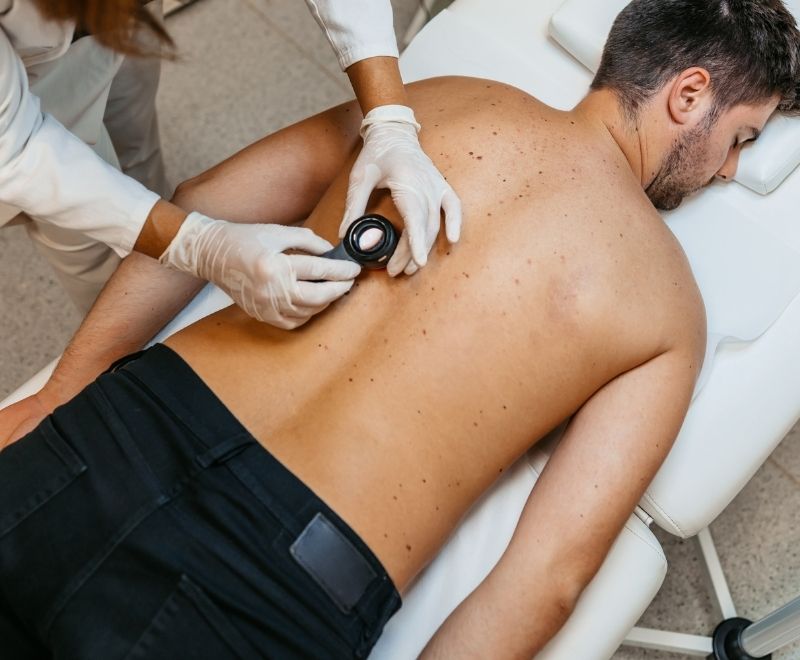
During your baseline SkinTracker™ appointment, our specially trained team will capture a series of high-resolution, total-body images using smart imaging technology. One of our skin cancer experts will also complete a physical examination.
From your second imaging session onwards, each new set of images is compared to previous ones, which builds a clearer picture for our monitoring and early detection. Each susequent appiontment our clinicians complete a full-body skin check, examining any areas the AI has detected.
You receive clear guidance on next steps, whether that is routine monitoring, follow up imaging, or further investigation.
Monthly self-checks are recommended. Choose a consistent time and examine your skin in good natural light so you can recognise changes early.
This “ugly duckling” sign can indicate early melanoma. If a spot looks or feels different, book a professional skin check promptly.
No. Many melanomas appear as brand new spots. Other skin cancers may present as non-healing sores, scaly patches or shiny bumps.
Your SkinTracker™ appointment includes total body imaging, AI assisted mapping and a detailed examination by a specialist clinician. Changes are tracked over time, supporting earlier detection and long-term peace of mind. Learn more about SkinTracker™.
*Source: Pampena et al., JAMA Dermatol. 2017